Nuclear or Renewables? France and Germany’s Diverging Paths to Net Zero

.png)
Executive Summary
Amid growing concerns about increasing carbon emissions and climate change, the European Union has decided to accelerate its transition toward carbon neutrality. France and Germany, two of the continent’s largest energy consumers, have taken drastically different strategies to achieve the same common goal: reach zero net carbon emissions by the middle of the century.
France continues to rely heavily on nuclear power, a legacy of the 1970s Messmer Plan, which now accounts for over 76% of its domestic electricity. However, Germany went the opposite route and took the bold (read: idiotic) step of decommissioning all nuclear plants by 2023 in anticipation of switching to other sources like wind, solar, and biomass. This policy switch, known as the Energiewende, directed over €100 billion toward the development of renewable energy sources.
Both countries have successfully decreased carbon emissions with Germany decreasing carbon emission by 46% since 1990 and France decreasing by 24% since 1990. However, despite Germany’s greater percentage reduction, it still emits significantly more carbon per kilowatt-hour of electricity and produces approximately 200 million more tons of CO₂ annually than France.
Although Germany and France generate nearly the same amount of energy, Germany's higher consumption of energy has made it increasingly reliant on imports — including electricity from France’s nuclear-powered grid.
The debate between France and Germany over nuclear energy is a central and defining feature of the European Union’s broader energy policy goals to reach zero carbon emissions. Doing a deep dive into the carbon emissions, energy price, and type of energy technology between Germany and France will give insight into the effectiveness of nuclear versus renewable energy in the path to a carbon-neutral future.
Background—How These Decisions Were Shaped by the EU
The European Union’s (EU) Energy Transition Plans, specifically REPowerEU, intends to provide affordable, secure, and sustainable energy for Europe. France’s energy transition centers on a significant and prolonged reliance on nuclear power. In contrast, Germany’s most recent plan, Energiewende, focuses on replacing existing nuclear and fossil fuels with a system dominated by renewables.
The derivation of the nuclear-centric energy plan France follows was set in motion by the Messmer Plan in the 1970s. This followed the Organization of Petroleum Exporting Countries (OPEC) energy crisis. The Arab oil embargo sparked fuel shortages, high inflation, and economic recession worldwide. With high energy outputs and carbon free energy, France continued to expand their nuclear industry. France has done intensive research, and the Orano La Hague plant allows spent nuclear fuel to be reprocessed and reused. This greatly reduces the nuclear waste issue that much of the public is fearful of.
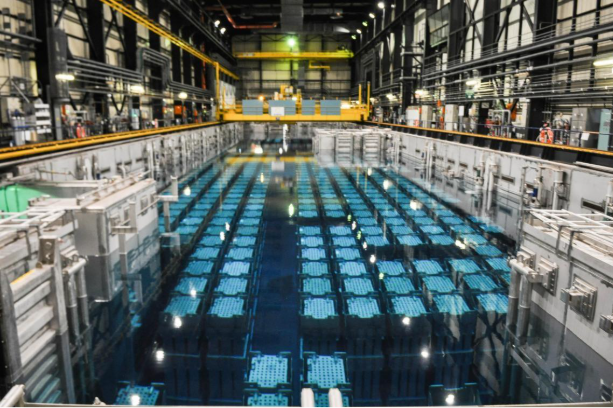
Orano La Hague Processing Facility
Germany made a political decision to decommission all its nuclear power plants by 2023. The root of this fear is believed to stem from nuclear accidents like Fukushima. The main goal was to switch completely over to renewables to reach net carbon neutrality by 2045. They invested over €100 billion into wind, solar, and biomass infrastructure. Germany has been making additional investments since to keep upgrading and adding to a renewable grid.
Economic Considerations
Germany has made a substantial financial commitment to its renewable energy transition. The initial investment through the Energiewende fund was estimated at €100 billion, primarily to jumpstart the development of wind, solar, and biomass infrastructure. However, broader assessments suggest that the total cost of Germany’s renewable transition may be as high as €700 billion1. The large increase in price estimate is likely due to the necessary grid upgrades that Germany had to invest in to adjust for renewable energy. These investments were not originally included in the €100 billion cost estimate. This highlights an economic underlying concern of renewable energy.
In contrast, France has spent less than €100 billion on constructing new nuclear power plants and upgrading existing reactors to meet modern safety standards. 2This figure does not include operational and maintenance costs, which, like in all energy systems, remain ongoing expenses for both countries.
While both renewable and nuclear energy systems require significant capital for construction, operation, and maintenance, what ultimately matters is the amount of reliable, low-carbon energy generated per euro invested. The levelized cost of energy for nuclear in France and renewable in Germany are similar with both being around €0.04 per kWh. 3
Despite having a low levelized cost of energy, the true cost of renewables are not consistently low, as they can reach upwards of €0.144 per kWh. 4This is due to their performance relying heavily on the weather patterns in the environment. Without storage or backup systems the price tends to fluctuate more than nuclear. Nuclear energy tends to offer consistent, high-output base load power.
This raises a key economic choice to prioritize low-cost energy or reliable energy systems. In the case of nuclear, you don’t have to choose. It’s like having your cake, eating it, and then getting to play in a ball pit for several hours.
Grid Capacity and Energy Mix
An important factor when evaluating the effectiveness of an energy transition is grid capacity. Specifically, examine how efficiently different energy technologies integrate with a country’s existing infrastructure. This determines not only the reliability of energy supply, but also whether the investment in new technologies translates into consistent, usable power.
According to the International Energy Agency (IEA), France’s domestic electricity production in 2024 was sourced as follows:5
- 76.2% from nuclear
- 0.6% from oil
- 23.2% from renewables and biofuels
In contrast, Germany’s 2024 domestic energy mix was:
- 25.2% from coal
- 25.0% from renewables
- 40.1% from biofuels
- 9.7% from oil and natural gas
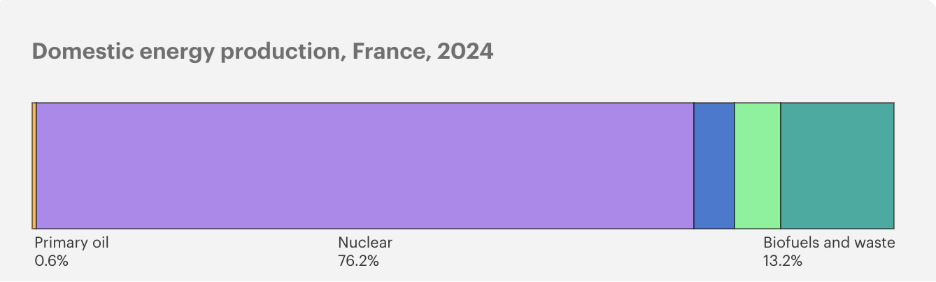
Figure 1. France Domestic Energy Production
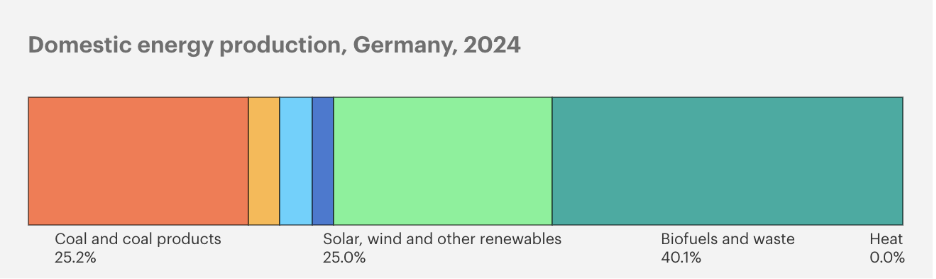
Figure 2. Germany Domestic Energy Production
This contrast highlights a key point: France’s grid is already dominated by low-carbon, high-capacity base load energy from nuclear, allowing for stable supply with minimal emissions. Germany, despite major investments in renewables (like, €100B, remember?), still relies heavily on carbon-intensive coal and imported fossil fuels to meet demand, a result of its nuclear phase-out. While Germany has made notable progress by nearly doubling its renewable capacity since 2015 (read: built a shit-ton of new renewable capacity), the overall carbon efficiency of its grid remains significantly lower than France’s.
Carbon Emissions
The primary driver behind France and Germany’s massive energy investments is to reduce carbon emissions by 2050. While both countries have made progress, their emissions profiles differ drastically.6
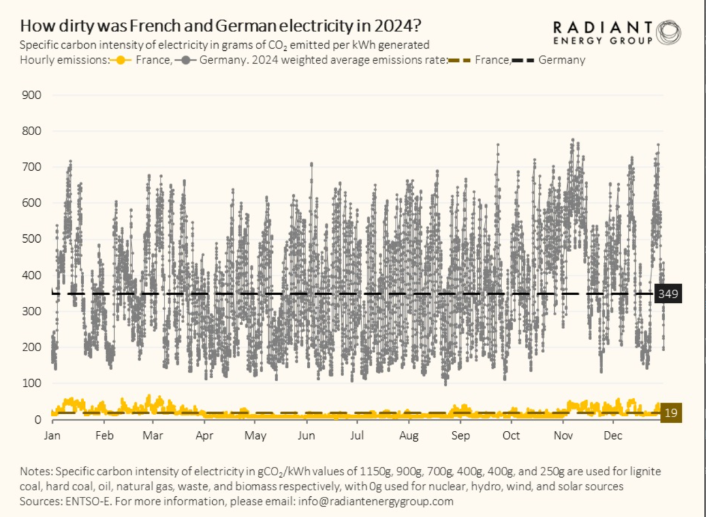

As of 2024, Germany emits over 18 times more CO2 per kilowatt-hour of electricity produced than France. This is a stark difference and is mainly rooted in France’s continued use of nuclear energy. Germany still relies on coal and oil for energy demand, whereas France utilizes renewables for the additional demand.
France’s ability to maintain low carbon emissions is largely thanks to its long-standing investment in nuclear energy, which provides a consistent, high-capacity base load without generating greenhouse gases. Combined with renewables, biofuels, and hydropower, France has built an energy system where nearly all domestic electricity production is carbon neutral.
Germany, meanwhile, relies on renewables, biofuels, and hydropower to replace fossil fuels but has no nuclear power to support the transition. While renewables are crucial to any decarbonization plan, they are intermittent by nature, and without a stable, dispatchable low-carbon energy source like nuclear, Germany has had to fall back on coal and gas during the transition to renewables.
This reveals a critical gap: nuclear energy plays an essential role in bridging the transition from high-emission sources like coal to a fully carbon-neutral grid. By removing nuclear from its energy portfolio, Germany has made this transition more complex and potentially more carbon-intensive in the short term.
In contrast, France’s model demonstrates how nuclear, and renewables can work together synergistically, with nuclear providing reliable base load power and renewables covering peak demand. This mix allows for aggressive carbon reduction without compromising energy reliability.
What does this really mean?
Now that the economic and environmental impacts have been outlined, it’s important to interpret what these numbers mean. To do this, Germany and France can be directly compared. Examining how much each country has invested in the respective energy strategies alongside the resulting carbon reduction highlights the differences between these methods.
A few key assumptions were made to enable this comparison:
- IEA provides CO2 reduction data from 2000 to 2022
- Germany’s CO2 reductions for both scenarios were found here
- France’s CO2 reductions since 2000 were also based on IEA data
- Estimates of Germany’s renewable energy investment varies widely. They range from €100B to €700B. This reflects uncertainty in the total cost of the Energiewende
- For France, an additional estimate was used to capture the lifetime investment and CO2 reductions from its entire nuclear program. This adjustment in Figure 4 demonstrates how cost-effective nuclear energy can be over its operational lifetime for reducing carbon emissions. 7
Germany began developing renewable energy infrastructure around 1990 and heavily invested around 2023, meaning most of the carbon reductions are captured in the IEA data. In contrast, France began investing into nuclear power plants in the 1960s and the long-term impact of this early investment continues to deliver CO2 reductions today.
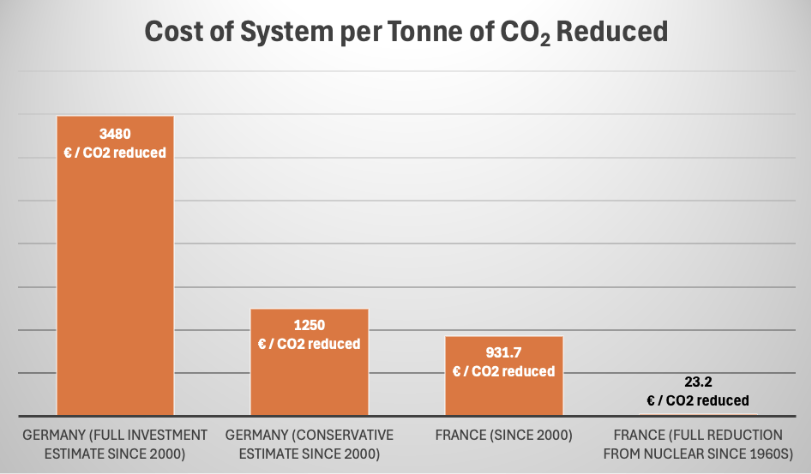
Figure 4. Chart Comparing Carbon Reductions Between Germany and France
While both countries have reduced emissions through clean energy investments, their paths and cost-effectiveness differ significantly. Germany’s larger investment on renewable energy has produced CO2 emission reduction, yet it is more expensive. France’s commitment to nuclear energy has yielded long-lasting, lower cost, CO2 reductions with a lower price per ton of CO2 avoided.
Closing Thoughts
So, the big question is: are Germany and France on track to hit the benchmark for zero net carbon by the middle of the century?
That depends. Both countries have made significant strides in reaching their goal. It will take more investment and increased support for both renewables and nuclear to reach this goal. There is no one-size-fits all solution to reducing carbon emissions. Investing in renewable sources can reduce carbon emissions but are they as effective at reducing emissions as nuclear? Intentionally discontinuing carbon neutral power plants that still had years left of their lifetime is not aiding in reaching net zero goals.
Renewables can be a very helpful boost to energy systems, but it is nearly impossible for them to constantly provide energy, since they rely on environmental conditions (e.g. the sun doesn’t shine at night). This means a base load energy source is necessary. At the moment, France’s main base load is nuclear energy, a carbon neutral energy source, and Germany’s is coal, a carbon emitting energy source. Eliminating coal from the generation mix is possible, but replacing reliable generation sources with intermittent renewables is not a competent strategy.
Reaching net-zero carbon will require practical choices, not just ambitious goals. While renewables can aid in the transition to a clean future, they cannot consistently meet energy demand on their own. Without a dependable, carbon-free base like nuclear power, countries will continue to rely on fossil fuels to fill the gaps. For Germany and France, expanding and building nuclear capacity isn’t just a sensible step, it is an essential one.
1 Dalton, D. “Germany / Nuclear Policy Would Have Cost €332 Billion Less Than Energiewende, Research Suggests,” NucNet Independent Nuclear News, 22 August 2024.
2 “France’s State Auditor Says EDF’s Nuclear Costs Are Increasing,” NucNet Independent Nuclear News, 21 February 2014
3 Economics of Nuclear Power,” World Nuclear Association
4 “In Germany, the Electricity Production Costs of Solar Systems Are Between €0.041/kWh and €0.144/kWh,” ACE Battery Blog, 24 October 2024
5 “France – Energy Mix,” International Energy Agency (IEA)
6 “Germany – Energy,” Country Commercial Guide, U.S. Department of Commerce, International Trade Administration
7 “Since its inception 47 years ago, France’s nuclear power has prevented 28 times 2023’s total CO₂ emissions,” Institut économique Molinari, 6 March 2025.
Subscribe to our newsletter
Never miss an insight. Subscribe for updates on industry developments, new articles, and podcast releases
Invest with Fire2Fission