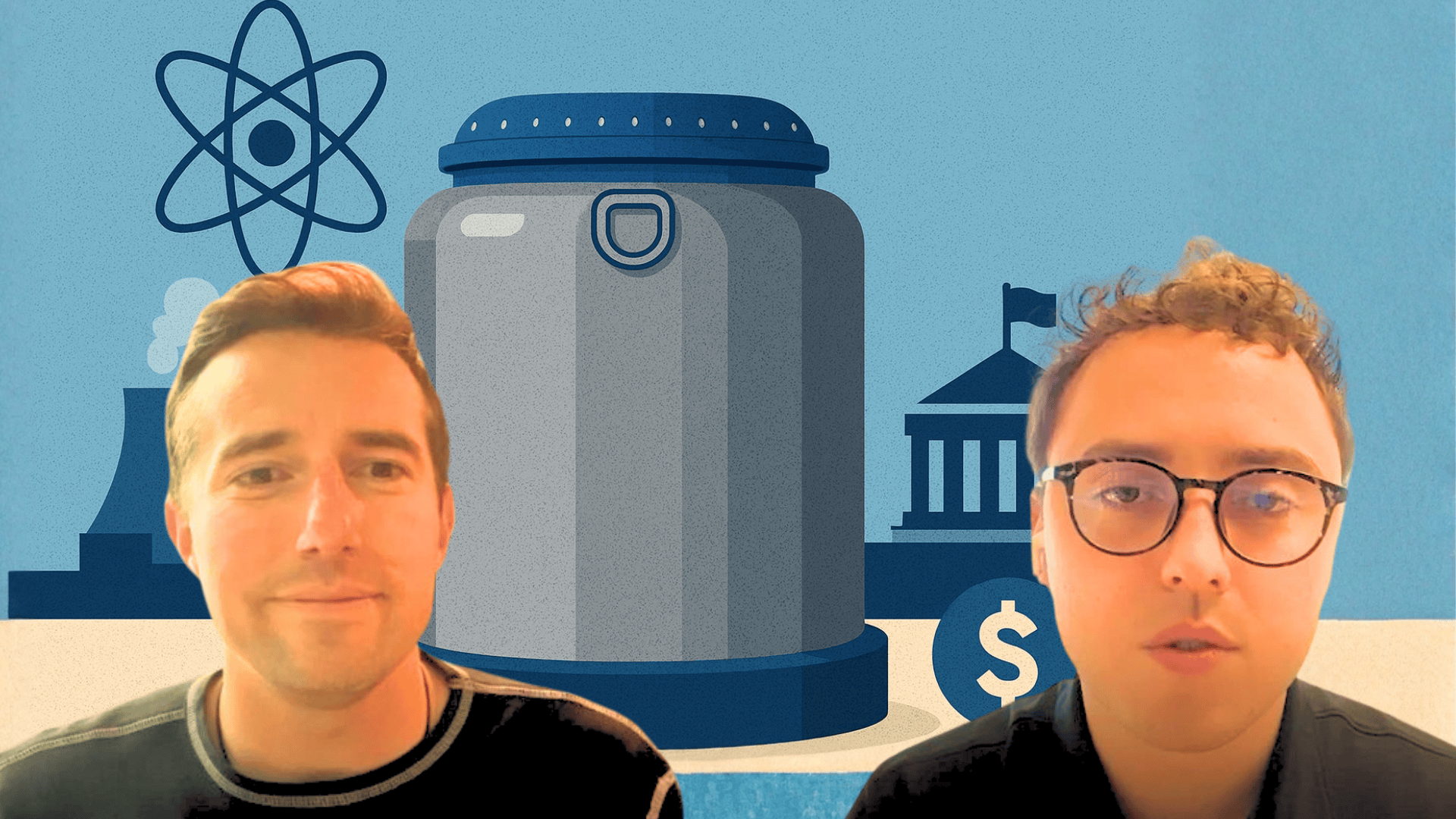
086 David Ramsden-Wood, Engineer and Energy Thinker
Transcript:
DRW (00:00)
The unfortunate thing is the oil and gas industry destroyed capital. And as you know, when I started writing Hot Take of the Day in 2018, after we sold One Energy, which I also hired you at, which was our premium play, I was very, very critical of management teams who were making very what I thought were obvious decisions to destroy capital, because in the name of telling the market they could grow, in the name of telling the market they had inventory, in the name of of
Just spending cash flow. They were spending 100% of their cash flow, returning nothing to shareholders and totally beholden at this commodity price where they weren't even using hedging. And I I will say I think the industry is a lot better run today than it was when I started writing eight years ago. But there's still the hubris to some of these management teams to believe that they can go alone.
Mark Hinaman (01:58)
Alright, hello and welcome to another episode of the Fire to Fission Podcast, where we talk about energy dense fuels and how they can better human lives. I'm super excited for today's guest. we have an engineer, an operations manager, an an energy executive, energy investor, prolific writer, really thought leader in the industry, energy industry, my friend, my longtime mentor, the one the only David Ramsdenwood, also known as DRW.
DRW (02:25)
What's up, Mark?
Good to see you.
Mark Hinaman (02:27)
Wonderful. Wonderful to have ya. I'm excited for this conversation. We only got to catch up minimally before we started recording. we we gotta get lunch sometime, man. Or coffee or I assume you're off the beers
DRW (02:37)
We do. We do.
Mark Hinaman (02:39)
training for worlds. So
DRW (02:41)
yeah, I mean I'm off the beer as much as I can be. as you know, I I tend to I tend to do everything to excess. So I have I have the zero button and I have the all the button. so beer beer beer
Mark Hinaman (02:52)
Yeah. We're we're similar, but
DRW (02:56)
falls in that category. But it's good to see you. I I remember the first time we met in my office like two thousand and nine eleven.
Mark Hinaman (03:06)
Eleven. Twenty eleven. Yeah.
DRW (03:09)
Two thousand eleven.
life has changed a lot since then.
Mark Hinaman (03:13)
It's been a it's been a wild ride. Yeah. Fifteen years later, I f I feel lucky. I feel like I got the preview of DRW before the world discovered DRW. and everyone's like, Do you know this guy? And I'm like, Yeah
DRW (03:27)
For for for
all for all the good for all the good and all the bad that that is, for sure. It was it was it was a younger version of the the wiser, kinder, gentler DRW that's sitting before you today.
Mark Hinaman (03:43)
I like both versions. I like them a lot. So well David, why why don't you give us a bit of your background just for the the few in the world that haven't heard of you or known of you? thir thirty to two minute intro of kind of your career and background and where you are now.
DRW (04:02)
Okay. well, as Mark sort of alluded to, I I started as an engineer. did chemical engineering with an oil and gas miner, and it was I graduated in two thousand and one. And so what was interesting about that time period was it was really the the we'd been on decline as an industry for sort of twenty five, thirty years for oil. Everything was conventional, everything was bumps, it was pushing in Canada where I started, it was pushing.
into the very northern territories towards Alaska. It was all gas all the time. Oil was heavy. And I was very fortunate because my the you know the bulk of my career happened between 2005 and 2020, which is when obviously the Shale Revolution had had caught hold, horizontal wells, the US grew from five million barrels a day of oil to almost 14 million barrels a day today.
And and really change the energy landscape. And, you know, when I think about nuclear or when I think about AI or data centers in space, I mean, I think all of those are at the same time period as when I started my career very fortunately, and I happen to be where all the capital is flowing. So so that's what I did. I did an MBA and now I am in law school as a hobby. I have one more year. I am a full time three L. You can imagine.
what my fellow students think of me.
Mark Hinaman (05:34)
Better work.
DRW (05:35)
but but anyway, that's a different story.
Mark Hinaman (05:38)
Perpetual student, yeah. I'm jealous actually. I've long thought, you know, someday if if or when I retire going back and teaching physics would be a wonderful way to spend my time. I I do enjoy academia and university system. so when you said you're on that you know too much.
DRW (05:54)
Te teaching would be a lot more fun than being a student. which which I I I I
think well, I think it's a really I mean it's an important conversation not to start the pod, but to end the pod. I think I I do I do see a lot of concerns just around what's coming and and I would also say, you know, in fairness to many of the young people today, like things are much harder today than they were when I was a kid, when you were a kid. Like careers had a lot more of a straight back.
forward path. I think the the the dream of go get a college education and then go buy a house, that was like achievable. And now I would say that so much of that advice is actually bad advice and and no one really wants to reset the education system or the life lessons they share with people. And so we're sort of in this really interesting crossroads as a society.
which I think energy is right at the forefront of.
Mark Hinaman (06:55)
Yeah. Okay, I wanna go back, start in your early days, because I don't know some of these things. but your time at and you started with NDARCO after graduation, right? Yeah.
DRW (07:05)
I did.
Mark Hinaman (07:06)
And
a lot of your resume just says, you know, engineering, myriad of projects. I reflect on that time and maybe if you can pull out some stories of projects that you worked on. I remember y you talked about doing a water flood. you talked about a story where you cemented a pad. but we can talk about that.
DRW (07:28)
Actually the the s
the cemented the pad was actually Mike Bridges. And he was he was always he was one of my he he
Mark Hinaman (07:35)
This is a good live lesson. Yeah, let's let's talk about this one.
DRW (07:38)
was he was one of my fave favorite bosses of all time and I'm so blessed. I think, you know, I look back on Anadarko and I think of your first job like your first serious relationship where, you know, you don't know what you don't know and it you can't even imagine ever leaving. And
Like you've never seen a different salary pay structure or, you know, incentive work, whatever that looks like. And and so I just felt very blessed because it was at a time when, you know, the training at majors was was very, very good. So I felt like I had a tremendous support network of training. There were a lot of people who are my age that I worked with. I could never imagine leaving the company.
I got an opportunity to work reservoir engineering, production engineering, business business development completions, and then ultimately when Anadarco bought Kerm McGee and Western Gas, in what I think anyone in industry who worked anywhere near those companies would know was really a reverse takeover, because Kerr McGee certainly took over, got all their options paid, and then reset their options at a new company. It was a pretty good deal for them. but anyway, I got to get moved down to Denver.
And so that was really how I ended up in the US, even though I'm an American citizen. I grew up in Canada and I just feel so lucky that I I came to Denver at the time I did. The Bakken was just kicking off. The Eagleford was 2000,
Mark Hinaman (09:08)
What was that? Two thousand eight, two thousand nine?
DRW (09:11)
like, yeah, 2006, 7, 8 was sort of when they were testing. And I remember I was at Anadarco. One of the jokes was if you really sucked in your career or done something wrong, they would move you to the to the DJ Basin.
And it was all vertical wells and they were all on the refracts and the trifracks and the quadrifracts. And it was just like a horrible job. And when I left in 2009 to go to Enterplus, one of my buddies who ended up being the CEO of Ultra Petroleum, but Brad Johnson, they had just drilled the first horizontal well in the DJ and it was flowing like 400 barrels a day, hadn't declined at all, and he was like
This is kind of crazy. These horizontal wells are are weird. I wouldn't have thought it would have done this well. And and I'll never forget that that that the DJ it went from being like the worst asset Anadarco had to the best. And and it made careers and it it made the company. And I think the whole Kerma Gheey acquisition was based on natural gas. Onshore natural gas was the best. And and ultimately it was the Wattenberg asset that.
That saved that acquisition, and the natural gas assets really failed. So it's it's just interesting how timing and commodity prices matter so much.
Mark Hinaman (10:31)
Which
was unknown, right? That that was not predicted. It couldn't have been predic I mean, some people might have called it, but like it was a big surprise the whole industry.
DRW (10:42)
For sure. And and I think, you know, to to talk to nuclear, I all these plays like I one of my hobby projects now, as you know, Mark, I I can't I'm I'm the worst retired person ever. but I've been doing quite a bit of real estate. And what I find interesting about real estate is it's so similar to oil and gas. It's about the location, it's about the construction and it's about the timing. And
you know, in in the the old adage in real estate is, you know, you can you can have a successful project, but three people probably went bankrupt on the exact same concept before you did it. And and and so I think flash forward to nuclear, obviously this is the way of the future. I've been very happy to see politically that the Democrats have added it back into their their sort of mandate after having excluded it for the b better part of the last thirty years and that o opposition pressure and
And public fear mongering seems to have stepped down because whether you believe that a carbon-free future is important or not, a energy rich future is certainly important and nuclear provides that. And regardless of your views of scarcity, at some point some things run out. And and nuclear has a huge runway. And so it's just the timing, because many, many, many people over the last 30 years have
have been at the forefront of the new nuclear industry. And then there's a false start and lots of money's lost. And then it takes time and then people are ready to go again. So I'm curious your take on where the industry's at today and and what you're seeing under the new administration and what you see for the next ten years.
Mark Hinaman (12:22)
Well, I've I've got lots of thoughts, but remember who's interviewing who on who on this podcast?
DRW (12:26)
Ha ha ha
Mark Hinaman (12:29)
So but no your timing the timing point is good. I remember it was twenty fourteen, we were sharing an office. So i if folks aren't aware yet, right, we've worked together a lot. You've David hi hired me three times and never fired me. thank God. So
DRW (12:45)
It was always me ga it was always me getting fired, Mark. It was it was a
it was a real skill. I was great at hiring and less good at staying hired.
Mark Hinaman (12:52)
Yeah, yeah. It's very fun. I I look back on them always working with you David very fondly. So but I remember in twenty fourteen, we were sharing an office at Sundance and you know the even back then there was a lot of discussion around this the climate discussion and the environment and peak oil and I had this thesis that
oil demand would decline with the advent of autonomous vehicles.
Because the fleets would be replaced with electric vehicles and total demand would be replaced. you disagreed, you thought autonomous vehicles weren't gonna be really a thing of the future, and because of pride of ownership, people still wanted to own their vehicle in America specifically. and people wanted to own cars. my my colleague now, also David, owns six vehicles. So, you know, that's proof point that with wise eighty. eight. Yeah, so.
D do you do you still think that? What's your view on kind of autonomous vehicles and demand for oil in the future? I I'll say I think I was wrong with my view on demand destruction. obvious you know, the world has proven that it wants more oil in the future and I if I were to revise that thesis, not to anchor you, but I I think it's only gone up.
DRW (14:19)
Yeah, I mean I I think I've had a view that that oil demand goes up a lot. I think the the last six months under this administration with frankly what looks to be price manipulation through fake headlines and the level of algorithmic and AI trading that allows you to manipulate a price. I I I have a really hard time being able to link pricing to demand. Clearly at some point we run out of oil.
in the in the level of of abundance that we have it now and prices have to escalate. I think that that we've seen such manipulation that it's it's really hard to tie. But yeah, I would follow the theory that oil demand will continue to grow. I think that that the world had a false start on EVs. I own I own a Tesla. I think you know that. but I bought a Tesla and it is the greatest car I've ever
Driven. I have the plaid. I use the self-driving feature all the time. I really wish that I didn't have to be looking at the road while I used it and that I could be reading text or reading books. So I think in the world of autonomy, I I head more towards that than not, but I still love that I own the car and I'm not sure I would be sending it out taking other people around. So I don't sort of see the Jetsons world, but I definitely see.
technology doing more. I think the Waymo is one of the coolest vehicles I've ever been in in my entire life. but but again, ownership is a thing. And since now houses are much, much harder to afford. I think maybe people are replacing houses with more cars, perhaps. and they're fun and they're and they're interesting. And so maybe, maybe they're maybe the balance is it's between us.
Is that there will be more autonomy due to automation and technology, but oil demand will continue to grow because you know, as Chris Wright often says, two billion people on the planet use less electricity than your refrigerator every year. And that has nowhere to go but up in a world that looks for abundance. So I think energy demand across the board has to go up everywhere.
Mark Hinaman (16:41)
Yeah. Completely agree. I wanna revisit this idea of unknown horizontal plays and groupthink in the industry. Right. So we mentioned the Wattenberg, drill the horizontal, looked great. but you spent a lot of your career exploring these shale basins and thinking a lot about them, right? Like Ener Plus was you worked for Enerplus in North Dakota for a birthold reservation asset,
Yeah, when you were at Sundance, it was South Texas and Oklahoma, and then eventually ended up in in the Permian. talk to me about seeing assets that other people were overlooking and how you had the confidence and resolve to go and chase some of those assets. Or maybe it was
DRW (17:30)
If you're
Mark Hinaman (17:35)
out of necessity.
DRW (17:37)
Yeah, I I think the confidence might be just because I'm a bit of a prick. and and those that the and those
Mark Hinaman (17:41)
Yeah.
DRW (17:43)
that know me know that that's at least partially true. I I do think, you know, and and I definitely tie it to squash. So it's it's funny that I'm going to Worlds in in three weeks. I w I you know, I I was
Mark Hinaman (17:53)
Yeah, you're exactly
DRW (17:56)
I was an individual sport athlete that was competing at the highest level. And so when I started my career, it didn't really dawn on me that my career wasn't just an extension of sport.
And so I really did view myself as competing with my peers to be the most knowledgeable, the best I could be, but then also competing with peer companies to see things before they did. the Bachin was interesting because when I left Anadarco to go to Enerplus, we had a very, very small sleepy asset in Montana, as you know, because I hired you in Enerplus too. And
You know, they had massively over drilled it. They didn't understand the permeability. And I think that they had destroyed a tremendous amount of value in the name of just spend capital, because if you're spending capital, you're getting good attention, but it was never about maximizing profit. I tie that to today's data center build outs by the Mag Seven and the $750 billion they're planning on spending. I am quite convinced that they are overcapitalizing this play.
The same way oil and gas overcapitalized and destroyed returns for the better part of a decade, over drilling these plays. But North Dakota was fascinating because on the south side of the reservation, you had Marathon, who had been drilling long laterals using blast joints and perforated pipe. So very, very poor technology. And on the north side, you had EOG Partial, which
took a long time for them to even really figure out the play. But there was this Indian reservation that was scary and it existed between these two great plays. So clearly the oil was there. And there were three private equity firms at the time who were willing to take a take a leap. And and I always appreciated that I was a younger person. It was what, 2010 when we did this. So I 32.
And I I felt like I I built a really strong relationship with Kodiak and Lynn Peterson in particular, Peak and Jack Vaughn in particular. They kind of took me under their wing and I learned what it was to be an entrepreneur. And ultimately we put together, I believe it was 75,000 acres through three transactions that at the time people thought we were crazy and and it certainly was amongst the best rock in North Dakota. And, you know, Cord bought Ener Plus for that asset.
Enerplus had had a huge run with it. and so I was very proud that all it was was just looking at the data.
Mark Hinaman (20:31)
Yeah.
DRW (20:32)
I think Eagleford in in 2014, 15 Sundance. I think we saw some interesting plays as you know, but because I hired you back there. I that that one was tough because the over the overlay of the commodity price environment in 14 was it was like hundred dollar oil.
And then all of a sudden it was a crash. And
Mark Hinaman (20:53)
Tang. Yeah. It went from a hundred thirty.
DRW (20:56)
and so and so the lack of stability made it hard because you were drilling wells at at 100, you would never drill at 50. You were buying plays at 100, you would never buy at 50. But there was a very clear trend that the the the Eagleford was getting old and tired and there wasn't a lot of growth. And so
Mark Hinaman (21:17)
Well I remember
there was so two things. the Eagleford play
I remember w we were making decisions in the name of raising capital. And it was just like you said, spending money to raise money, which never makes sense to me. Like so and eventually the industry figured it out. Because like I grew up in a family-round business where you always had to have free cash flow. You always had to be profitable. And so like this idea of overspending your budget and doing things that were net negative. For example, I remember the Tikingi wells, we had printed a result.
reserve
report and I looked at it and I was like guys this says Pv0 is negative two million dollars but we're still gonna drill this well and it's like yeah it's like so wait let me get this straight or you're gonna spend seven million dollars and success looks like get back five
That's obscene and we did it and we lost money. And I was like, This this doesn't make any sense. So that was one thing. other thing, I just went back this weekend and looked at the Fort Berthold Reservation. They were the best wells in the basin. Like they're some of the best. You were right.
DRW (22:23)
Yeah. Well, and and it was
and and it it was it was cra it was crazy. I I feel very blessed. I I was sitting at the right spot at the right time. I joined the industry. You know, there were 30 year industry veterans who'd worked until 2005, but they didn't have the knowledge that people who started in two thousand five had because we were at the leading edge of this horizontal play. And I think to your point on groupthink and like collective knowledge is sometimes you have to break the mold.
The unfortunate thing is the oil and gas industry destroyed capital. And as you know, when I started writing Hot Take of the Day in 2018, after we sold One Energy, which I also hired you at, which was our premium play, I was very, very critical of management teams who were making very what I thought were obvious decisions to destroy capital, because in the name of telling the market they could grow, in the name of telling the market they had inventory, in the name of of
Just spending cash flow. They were spending 100% of their cash flow, returning nothing to shareholders and totally beholden at this commodity price where they weren't even using hedging. And I I will say I think the industry is a lot better run today than it was when I started writing eight years ago. But there's still the hubris to some of these management teams to believe that they can go alone. As you know, I I wrote an article in about 2019 that said.
In five years, there'll be ten major comp 10 major oil companies and ten private oil companies, and that'll be it. And fifty percent of the jobs will be lost. And there's really no reason for these companies to exist with their capital structures as they are. And yet the pace of consolidation, even including the slowdown for COVID, I mean, there's so many guys that could just sit here right now and be like, Why, why are they not together? Why are they not a stronger capital base? And and ultimately to the answer of
of what comes next, the US is tapped out for tier one inventory and it's getting tapped out for tier two. And and all the basins that that we know have oil have been tested in one state, way, shape, or form. And so maybe the Tuscaloosa marine shale or the Maori or some of these secondary plays work at $150 or $200 a barrel. But if oil prices get to that, there's so many plays in the world, including in the Middle East, including in Venezuela.
including in Iran, which isn't surprising that we're involved heavily in Venezuela and Iran and frankly Russia, because that's the next wave. So these companies need to be going internationally to be able to secure the reserves to last the next fifty years so that we can get to a fully transitioned nuclear world that has abundant cleaner energy as
oil reserves start to decline.
Mark Hinaman (25:10)
Yeah.
I've I've got more thoughts on that. We can talk talk publicly and privately about this. So let's let's revert back to one energy. describe the story of you know you're looking and declining every every well in the country. How did you discover JAL?
DRW (25:31)
Well, I I mean to your point, and this was before AI, right? And so I wrote I wrote a book, What the F is Wrong with Everybody Else, What They Didn't Teach You in Business School. That too was before AI. I think if it was with done with AI help, it would be a lot better than it is. But but yeah, I mean we we had a
Mark Hinaman (25:47)
I think you're wrong.
DRW (25:49)
we had a tool and and yeah, I I hand declined every horizontal well that had been drilled in the last seven or ten years in the United States and every basin. And we built
An evaluation system that allowed us to effectively value any deal of any size within a very, very brief period of time. And we were also, because of the composition of the team, we were also seeing a lot of deal flow that was both on market but a lot of off market. And we had a very fortunate introduction with some guys who were looking at the Fed sale in September of 2016. And we had a thesis that New Mexico, like Fort Berthold, was misunderstood.
People didn't like federal acreage. They couldn't understand the BLM. They wanted Texas-like permitting times. And so we bid, we got permission to bid and we partnered with some folks, and we bid $25,000 an acre for a 2,500 acre block that looked absolutely incredible. And we lost to Matador, who paid $33,000 an acre, which
it wasn't lost on me that the most recent Fed sale had Devon buy an acreage of three hundred and thirty thousand an acre. but anyway, so so from that twenty twenty six, so ten years, ten years later, ten years later
Mark Hinaman (27:04)
Like most recently twenty twenty six Fed sale. Like X value. Yeah. Yeah.
DRW (27:10)
it it fifteen you know, it 15X the effectively the land value we were bidding that everyone thought was crazy. And so again because our our team was small and hungry and and
We saw what the resource was because we'd I'd seen the wells and I said, Guys, I've never seen wells like this. This this is the best play in the United States. And so slowly but surely we ended up assembling kind of 10,000 acres through some creative transactions, just some incredible work by the partnership. And and then we were able to, you know, 18 months later in 2018, we sold
We sold it in part to what is now Permain Resources, in part to what is now SM Energy, and in part what is now Devon.
Mark Hinaman (28:00)
Yeah.
DRW (28:02)
so so it was it was incredible. But again, we were looking and just looking at the data and others weren't. And and again, I think I feel a little fortunate that AI didn't exist because I think if it did, maybe people could have come to the conclusions we came to faster and for other companies.
But we were right at the forefront of of discovering New Mexico as to what it was. And we were able to generate a lot of capital for our investors and for the company that bought us, they generated even more. So well, well done to the team.
Mark Hinaman (28:34)
Yeah. I i reflecting on it, I find it bizarre. right, so you hired me to do ops for one energy and we were drilling a couple wells to kind of prove the asset and I remember standing on location in twenty eighteen,
And I couldn't see another rig. Like, you know, it was kind of a high point in the basin, so you could see further than if if the world was flat. I mean, it's very flat in West Texas, New Mexico, but you can see forever. And you know, you couldn't see another well being drilled or really any other development. And there's just this misconception that there
This was a bad asset, that there was no oil there, that it was pinched out, that it was up on the central basin platform. And then you reflect on that and you're like, guys, this is in the middle of the Permian Basin, and it was a blank spot on the map. It's and like
DRW (29:26)
Yeah.
Mark Hinaman (29:27)
in hindsight it feels obvious, but everyone had missed it. Like how do you that? I I
DRW (29:30)
Well if you remember if you remember Cook.
Mark Hinaman (29:32)
don't it it still doesn't make sense to me, but
DRW (29:35)
Con Concho
Concho now Conaco's wells. They had the the Viking hell the skull cap and the Viking helmets in the Monterra and they were a mile away. The Monterra like a hundred and fifty barrel a foot well. And it was it was a mile from where we drilled. I think, you know, one of the lessons that I reflect on and and I you know how like life I have no regrets because if I ever had to relive anything that I did in the past, I wouldn't be where I am today. And so I feel very lucky. But
You know, we took a technological risk that I know I pushed very hard for, which was to use sliding sleeves. And this was, as you know, at a time in 2017 where oil prices had recovered, it was very busy, you couldn't get frack services, people were pushing this new technology, and we used frack sleeves, and it worked on one of the wells, didn't work on the other. And because of that, people couldn't see through it because the industry was so used to using operational issue.
Don't worry, just pay us full value operational issue. And because of that parade well being under stimulated, even though the part as you remember, I I was always pounding the table that the twelve hundred or whatever feet that we completed was producing a hundred and fifty barrels a day, which if you normalized, it made it one of the better Wolf Camp wells. And I was like, the thing's never gonna decline, which the last I heard it never really did.
Mark Hinaman (31:01)
Well we went
and re drilled that section and yeah. Incredibly profitable section.
DRW (31:05)
And it was an incre incredible section. But but what's crazy
is had we completed that well properly, then we probably get bought at fifteen thousand an acre or eighteen thousand an acre by Taprock, who became Permian Resources. Franklin Mountain never exists. They don't go to the Fed sale. They don't become the company that sold to Kotera for two point five billion dollars. They don't like
You know, I it's like that whole story, all because we tried technology and it was misunderstood. But ultimately the returns that were withheld by the team and the companies that ended up getting that opportunity, they made huge multiples on their money just because they understood what was happening and trusted the team and the rock. And so it was a really good learning for me that sometimes operational issues are real.
And sometimes they're definitely not, so.
Mark Hinaman (32:04)
Okay, I wanna revisit this idea or come back to it, put a pin in it about rocks that people don't understand and opportunity that exists elsewhere. but first you mentioned tap rock.
the Fed sale. tap Taprock had a chance to buy that acreage. So I've got some good friends that were that helped found Tap Taprock. Rob Thompson, he's one of my closest friends. He's the geologist over there that had the thesis that similar to you said New Mexico's awesome. We should go drill there, guys. and worked with Ryan London and the other guys, Springmeyer, to go and put Taprock together. Right? They bought the acreage across the section line from One Energy in Franklin Mountain, but they had a chance to buy the One Energy acreage, just like you said.
Do you remember I I tell the story to folks, but I'm curious about your perspective of that story. Do you remember why they did or didn't purchase?
DRW (32:54)
I I I I do and and I'll I'll
be I'll i again I'm I'm older and wiser now, Mark. So I I I I sometimes pull punches. I don't when I'm drinking beer, but as we discussed, I'm not drinking beer right now. yeah, I mean I think I think just overall I would macro say that that when egos get involved amongst wealthy people, it's it's what it's what is maybe not understood
in the current world about like Elon Musk and Mark Zuckerberg. And I'm not saying I understand them particularly well, but there is something about being right. And and when money is the scorecard for being right, I think it's hard sometimes to have a true level of collaboration if someone else feels like they're getting the raw end of the stick. And so I just think that there was overall reluctance at that time for the big companies.
To pay smaller companies the value of what it probably could have, because they didn't want to make people rich. And in the grand scheme of life, those companies would have made tremendous multiples of the money they volatily made. I always tell the story of Concho, where they sold an asset to Silver Creek. Silver, so the listeners who know Will and Gas remember, but they sold an asset.
That then got sold three times back at five times the price. And Concho ended up back with the same asset at a way, way higher price than what they sold the thing in the first place because they didn't truly understand it. So so yeah, Taprock could have, and you know, more to the point, at that Fed sale that Franklin Mountain ended up winning, Taprock had a whole bunch of sections that they were bidding that they would have ended up paying like a hundred million dollars less.
Than they would have had Franklin Mountain not existed, which even from just a strategic standpoint, it would have been smarter for Taprock to buy Franklin Mountain because or to buy one energy, because then no competition could have existed. and and so when you think about mini monopolies, you should always own all the houses in your neighborhood. Otherwise, you can't control the price.
Mark Hinaman (35:12)
Great great analogy. Yeah. Yeah. Had an opportunity to buy offsets and ended up paying more for it anyway. So
DRW (35:19)
Not s not surprisingly
in my real estate strategy I I do tend to try and buy all the houses on the block and then
Mark Hinaman (35:25)
Mm-hmm.
DRW (35:26)
and then and then build build one and only release the next one to production when the first one's sold at a mark to market I'm happy with.
Mark Hinaman (35:35)
Nice.
DRW (35:36)
so so yeah, I mean it's real estate's just oil and gas. And
Mark Hinaman (35:41)
I love it. you had a quote or a phrase that you used to say all the time about raising money. So you'd say, if you have to pick up the phone more than once, you shouldn't be raising money. wh what'd you mean by that?
DRW (35:56)
Yeah, I mean, I I and I I honestly I see it I see it as much today as I did then. But yeah, so the chapter in the book's called If you have to pick up the phone more than once to raise money, you shouldn't be raising money. And and what I meant by that was, you know, you can't just wake up one day and say, Hey, I'm an entrepreneur, I've I've written this new code, new app, new whatever, and I'm just gonna reach out and my friends and family are gonna give me money or
A private equity firm's gonna give me money, or I'm gonna go straight to family offices and I'm gonna be a millionaire. the the point is as you're thinking about these things, you need to be well enough connected to the whole landscape so that you know which family offices are looking for, which investments, what their thesis are. And so, like I go to Silicon Valley, all those guys were all tight and all investing in the same things and hearing about the same things, and they'd hear about PayPal.
But somebody who was starting a competitor to PayPal also knew the 19 private equity firms that didn't get to invest in PayPal. So then those were the people that you should call. And you'd be able to call and you'd say, you know, you'd met these guys before and you were like, hey, Bob, I'm doing palpay. And here's the thing and here's the term sheet. And you know that they're ready to go because the the cold call capital raising, by the time you've told everyone your idea and pitched it.
Either someone else has done it, somebody else has stolen it, or the window is closed. And so to me, it was always if you want to be an entrepreneur, you have to know where your capital sources are before you even have the idea. And you have to nurture that relationship over decades to be able to make the phone call. Cause eventually with success, you can do what Elon does or what Ryan London does, or, you know, many those guys, they can pick up the phone and call.
And people will give them money, but they they weren't they weren't always them. and they had to start somewhere. So that's that was what the advice of that chapter was about.
Mark Hinaman (38:01)
Fostering relationships over long durations. It's good advice. It's great advice, I think. You also talk about private equity guys being ligers. that's a comparison you made in the book.
DRW (38:11)
For yeah.
Mark Hinaman (38:13)
As as a private investor now, you still believe that or what's what's your view? I'm curious
if that view describe it to those that are unfamiliar with this idea of a P E guy being a liar.
DRW (38:18)
Yeah. Yeah. I mean, and I think I think it it goes so s
so a Liger was like the combination of a lion and a tiger. I'm sure I stole the name from Napoleon Dynamite, but it was it was basically like, you know, the private equity firms similar to banks. the first guy knew who to call, raised money from family offices, had great success, became worth fifty million dollars.
hired a whole bunch of young people and the young people just wanted to be the old people. And and it was always just like, wait till the old guy goes, then I get his job, then I get his money, then I get his prestige. And so they were very they they would not take steps out on really new business ideas tremendously. They would go to what worked and the model that always worked that was Groundhog Day. And and so I think Silicon Valley is like a high level example of that where
you know, you would burn billions of dollars of capital on an Uber and then a DoorDash and then a and then a stitch fix and then whatever the new startup was, but they had the same model that they just did. And so in oil and gas, private equity was always about, you know, get the land, drill two wells, flip it, take your cash, and move on. But they they didn't necessarily have the longer term cycle. And like when you look at the full cycle of one energy.
from beginning to end, that was a massive accretive multiple. And when you have the rock, you should never let go. And so I think that that had private equity been able to morph where they had their startup funds, but then they had their sort of we're going to run this for 10 years because it's truly an incredible asset. I think, you know, private equity could have blocked out every major company. And I think Double Eagle's doing that to a certain degree. But on the land play,
Like they just never give up and then they never sell it for cheap. I think Sky Callantine with Felix then and Validus now, I think is very similar, is that they've sort of turned that model on their head and when they show up in a data room, they're going to win and then they're going to make money. So yeah, that was that was the Ligers. I still believe it. I'm not as vicious as I should be in my investments, if I'm totally honest. I'm I think I'm too nice.
The words words that have never been spoken about me.
Mark Hinaman (40:45)
well, yeah. People that work with you directly, it's been my experience, yeah. You have a very different persona.
with in your work environment than you do in perhaps public persona. So which is good. It's it's it's a wonderful thing. the what was it like raising money for One Energy? I mean you guys were backed for by Carnelian then, right? I rem I remember the story
DRW (41:09)
Yeah. Yeah, I love the carneling guys.
Mark Hinaman (41:11)
they I don't know if you're willing to show the story about the day before you pitched him.
DRW (41:17)
probably not. but I can I can I can talk, I can talk in in high level. I mean, we were a unique team and it was at a unique time. And so, you know, obviously ultimately the four partners, one one lived in New York, sort of Houston, but New York I lived in Denver, one lived in Dallas, one lived in Houston, and we all did it we're doing we had no office and we did it all doing web conference.
Before webcrom, like we were using our first program was actually called Squiggle, and there wasn't the video bandwidth to be able to watch people all the time. So it would just take a screenshot of you every like 10 minutes. And then if you needed to do something, you could poke them. Like, I mean, like literally, this was 2016, and we would tell people this, and they thought we were absolutely crazy. How could you work from home? How could you not have an office? What about well files? Like,
You're doing all this like not you're not having meetings. As you remember, we had pipe drive, which was like the a genius idea from Leo. And you know,
Mark Hinaman (42:21)
Cigar out. Yeah.
DRW (42:23)
everyone would enter in all their meetings and their business development concepts every day and it would auto email a summary to the partners. So we never had to have meetings. Like it was one of the most efficient ways to run a business. And then everyone thought we were crazy, and then by twenty twenty COVID hits.
And everyone's like, my God, you know what you can do? You can work from home and not have files and collaborate online. And we're like, really? That's that's quite shocking. but yeah, so so yeah, so so because of
Mark Hinaman (42:49)
We still need to figure out how to short real estate. Like that's
DRW (42:54)
because of that again, and and I give Carnelian his credit, we were a atypical team with an atypical structure that hadn't worked together, like officially together. I'd been on a board, Brandon had been on a board.
of a company that I'd co-founded at the time and I knew Leo through some fundraising and some some work we did together. But, you know, we were doing distressed assets as a as a non-operations business development heavy, intellectually curious team. And we weren't gonna and and more than importantly, 100% we were not gonna be in the Permian. And ultimately over the next nine months, we looked at every deal and
And as I as I told the story about the Permian for that Fed sale, there was just no rock like it. And we convinced the Carnelian guys, which to their huge credit, they they listened to us. And I mean they had bison, percussion, and one energy were their first three investments in their first fund. And you know, now the the story of Carnelian as as capital investors is pretty legendary and the guys are pretty phenomenal. So
Of of all
Mark Hinaman (44:03)
Yeah.
DRW (44:03)
the laggers, I like those laggers the best.
Mark Hinaman (44:06)
Nice.
all right, let's circle back to this upstream environment and you weren't gonna be in the Permian. there were n there's no assets like it, but now as you said, $300,000 an acre, like it's super expensive to go and re-exploit the Permian or continue to exploit the Permian, like just cost of entry is massive.
that combined with asset backed securities right now in the new age of financing, it's super inexpensive, really debt. it's created a a weird environment in my opinion. And I don't know, I've got a personally I've got a view that I think there's a bunch of conventional plays throughout the US and the world that are ripe for disruption and additional horizontal development. I'm curious about your view of that.
DRW (44:57)
So I don't disagree with you, Mark. And I think on the micro scale, again, like if you're Conoco or Exxon, can you be playing with that? Probably not. If you're David and Marco, and we have a thesis and we know an area and we're the smartest guys in the room about that play, I think it can definitely work.
my my investment, like I run the Ramsden Wood family office with my sons. And you know, when we're not investing in public securities, which is very, very small, we invest in commodities because I think I understand them the best. And so if you have a thesis around the rock and the cost, then oil's just the the the variable that tells you if you're gonna make money or not.
I do I am concerned just broadly over the backdrop of oil price manipulation. Like I find it hilarious that gold was allowed to double, silver was allowed to triple, palladium was allowed to triple, and no there's no comments out of the White House about it. But yet oil price has to be sixty dollars in spite of the fact we've had fifty percent inflation going back to twenty nineteen, that yesterday.
President Trump said that Exxon and Chevron made too much money, but seem seems to mass Yeah, and I mean and it and what's crazy
Mark Hinaman (46:24)
Yeah. I find that bizarre. Completely political.
DRW (46:28)
is like and I wrote a hot take of the day on this a long time ago when Elizabeth Warren wanted a windfall profit tax on oil companies because it's the populist thing to say. But like the balance sheets of Exxon and Chevron are like five hundred billion dollars of capital invested. And until this this most recent AI infrastructure build out, Google and Meta and all these guys had like
fifty billion dollars on their balance sheet because it was a asset light cash flow heavy business. And it isn't till now that they actually have but Google's making ninety billion dollars on a fifty billion base and Exxon's making fifty billion dollars on a five hundred billion dollar base. And and and what comes out of the White House is, man, they're just they're price gouging, which is just such an economically illiterate thing to say. And and that's that you know, that's my frustration is
Between Kamala and President Trump, there is no choice as to who the better president would be, could be, and always will be. But boy, there's been a lot of own goals on a whole bunch of policy things that that are making it extremely difficult to be a commodity company today, a company today, and a citizen in the US today, in my opinion.
Mark Hinaman (47:44)
Let's pivot to gas, the the next best commodity, or worst, depending on your view.
DRW (47:51)
It's the best. It's definitely the best.
Mark Hinaman (47:55)
Yeah. Yeah. it's the one of my favorite authors are subsex writers. Dunberg just had an article where they're exploring he's exploring the idea of
The arbitrage, energy arbitrage or price arbitrage between gas and oil, gas and liquid fuels, and how it was likely to close given the increase in demand for natural gas and pri demand primarily driven by power plant conversion, right? Coal to gas, data centers using gas for either in front of the meter or behind the meter projects, and then LNG exports. speaks many broadly about gas DOD. I got a lot of questions, but I'm just kind of curious holistically, your view.
DRW (48:40)
I love
natural gas, but there is just so much of it. and so I I think
Mark Hinaman (48:45)
It's infinite. It's a platform.
DRW (48:47)
what was that?
Mark Hinaman (48:50)
There's an infinite supply, in my opinion.
DRW (48:51)
There's an infinite
supply. And so the challenge about that commodity is we have so much more tier one rock. And you look at these Marcellus wells, these Hainesville wells, and and then parts of the world they haven't really even explored it and they haven't, you know, we're so constrained in the US by pipelines and export capacity, which as you know, I've talked about this in the past. But in twenty twenty two, in November twenty twenty one, before the you the Russian invasion of Ukraine.
Elizabeth Warren wrote a letter to the six major natural gas producing CEOs saying, You can't export gas, you're hurting the American consumer, because you're gonna increase prices and capture the arbitrage between the pricing in Europe and the pricing in the United States. And then, of course, in January there was the invasion, and the solution to Europe getting off of Russian natural gas was to export more gas, and everyone seemed to forget about what happened to the American consumer. But
But broadly, like we're seeing a two seventy to three dollar environment, which I think is like marginally economic for most producers. It's not super interesting. But when oil when gas goes to four bucks, instantly everyone turns the taps on. And so you just don't see these sustained waves. Until we have twenty or thirty BCF a day more LNG export capacity and prices can normalize to the rest of the world, natural gas is a really difficult place.
To be in my opinion, except for short bursts on cold days in the winter.
Mark Hinaman (50:20)
What about as a consumer then of natural gas? If you're gonna make
DRW (50:24)
I I would I mean
I would be building way more CNG vehicles. Like I I think again I I started earlier when I said EVs were a false start. The the answer isn't EVs. The answer is is hybrids. and the reason is because you use less battery material. You don't have all the, you know, my Tesla in the winter it goes half the distance. In heat it goes half the distance. I have massive range anxiety, so I never leave the city. you know, none of if
I saw a car pulled over the other side on the road that was a Tesla that had clearly run out of battery. There isn't a five thousand foot extension cord that I'm aware of. So you have to bring a natural gas generator to reboost that car to be able to move it anywhere, or you got to tow it. but but hybrids are the right answer. And I think to natural gas abundance, CNG vehicles, when they you they were looking at using them for delivery trucks and and trucks on the road, I think C and G is a brilliant solution.
Mark Hinaman (51:19)
Yeah.
DRW (51:21)
And and we should be doing that more because it's cleaner than coal and and similar. Like what I hate about the whole Energize Denver initiative, right? Where Denver is just making itself the worst city in America. And I I am so concerned about this city and just losing its competitive advantage is gone. But Energize Denver, if you buy a commercial building, they want you to replace all your natural gas boilers with electric boilers. But natural gas brings the natural gas.
from the source through pipes that already exist and then burns and combusts it in location. Whereas electric, you're still creating the power from a very long way away. You have line losses, you have heat losses through the butt the boiler. It's so much worse. And so much of the power is still generated from coal. So like all we're doing is we're we're moving right it just
Mark Hinaman (52:11)
Yes, that you're gonna burn elsewhere and to make electricity. Yeah.
DRW (52:15)
it just we we're making the most boneheaded decisions.
Generally, and and I hate to say it, like this isn't a shot at Democrats, but Democratic run states just continue to run themselves off the cliff, like in New York, like in California, like in Illinois, like in Colorado. And like what we need is just good logical common sense. Natural gas stoves are good. If you want to buy an induction stove, they have cool technology. Buy one, but don't mandate that people move off one to another. Like let consumers choose. So
I hope we get back to a a a world where there's more consumer choice. And certainly the fact that Ford took a fifty billion dollar write off or whatever it was on their EV division. Everyone has stopped, you know, GM stopped with the EV stuff and now Tesla's really the only game in town again on electric cars because they're the best other than the Chinese companies. I think we're in the right spot for consumers.
Mark Hinaman (53:14)
I hadn't heard the idea of natural gas hybrids, right? Like I don't think that's widely discussed or thought about. but it's not a bad idea. I I mean refueling stations for natural gas and Canada tried to proliferate these in 2011 to 2014, right? They had a whole they they made C and G fueling stations in their Jonah field and tried to push this idea. adoption was slow, right? That it takes a long time to turn over fleets like that.
But from like a technical and energy perspective, it's really smart. I like it a lot.
DRW (53:48)
Well, and and
especially like honestly, since natural gas flows to your house, like in theory, you could have a natural gas compressor and actually charge charge the car with CNG the same way that you could that you can do the electric and maybe it's at a slower charge rate. But you know, I use a two hundred forty in my garage and it works perfectly fine for my Tesla. I'm not driving it a ton and and as an alternate vehicle, like like David there, who has how many vehicles does he have?
Mark Hinaman (54:17)
Eight. Yeah. Yeah.
DRW (54:18)
Eight. Yeah. Eight. So
like, you know, one or two of those can be electric, one or two can be compressed gas, and one or two can be a nineteen sixty seven Corvette stingray that you pound around town with.
Mark Hinaman (54:32)
Correct. That's the you describe my fleet. Yeah. David, I I enjoy cars fundamentally because they're they're of interest and that personal property thing that you mentioned is enjoyable. and I don't like
making necessarily payments, so I own these cars outright. I get to tinker on them in my own way. They provide transportation and they also provide a unique outlet. Some of them have their own collector's market or their own collector's clubs. And so I get to meet other enthusiasts in this brand, but at the end the day, they all serve the purpose of transportation and I get to change in or modify which I drive on any given day based on what fuels inexpensive or my taste. There you go. Real yeah.
DRW (55:16)
Yeah. Well, and and and I mean to to
your point and and the key that you that I pulled out of that whole nugget was, you know, you look at the economics of the cost and therefore you buy them. And and I I what I'm most afraid of of the current American education system is that they teach nobody finance. They teach people how to be dependent on banks and they teach people that you should buy the most expensive car you can with the biggest lease that you can.
But when you look at the actual running costs, I mean, as Mark knows, we use the family minivan that was a 2008 Chrysler Town and Country. we used that as the field truck at One Energy in 2017 and 18 because I didn't want to buy an eighty thousand dollar truck to bomb around the field when the minivan was perfectly good. And when we sold One Energy, I bought a place in Phoenix and I retired the van to the garage in Phoenix.
And I ran it for another eight years and 135,000 miles. Like that that ban cost me zero to run. And I finally donated it because I sold my house in Phoenix. Because, again, for financial reasons, I was offered a price more than I thought the intrinsic value of the home was. And so therefore I had no home. Therefore, having cars at a home I didn't own made no sense. But like it's all commercial, and I just feel like
Not a lot of people are commercial enough in all the things they they do. Business startups, family life, marriage, houses, rent, cars. It it's all just a transaction. And sometimes you get to have sex.
Mark Hinaman (56:53)
Yeah, I
agree. Yep. so what data centers are all the rage, but if I I wanna touch on this point of if there's an infinite supply of gas, as we discussed, virtually infinite, then you know these data center plays building
very large power consumption sites. Like, do you think it's a good idea then to be reliant on gas as a fuel for these assets long term? And you talked about nobody being hedged in the oil and gas industry. Like should data centers and power consumers in the future think about hedging and hedging these prices?
DRW (57:38)
I mean, I like I think that what the right answer is is probably a full integration that those guys, since they're going asset heavy anyway, they should own the full supply chain. So they should be owning
Mark Hinaman (57:49)
Vertically integrated
back to the wellhead, back to the rock or
DRW (57:52)
Yeah,
or or back to the LNG import facility or you know, it probably is they should own the pipe from LNG liquid gasification facilities that then can bring it in and then you can get gas from wherever you need in the world from the liquefication to your gasification plants and do it. again, what what what is my biggest concern about AI? Like, you know, I I made the joke before
You know, five years ago when I was giving speeches, three percent of carbon emissions in the world were for data centers, which were storing pictures of your cat. And and now data centers are being used to create animated pictures of your dog like hanging around with President Trump or whatever. And so there's certainly a use case for it, but I don't know if there's the I I think we're gonna so massively overbuild.
And then we're gonna so massively overexpect how much natural gas we need that ultimately we're gonna have the same wave as we have in in oil and gas, which is the price per kilobyte or whatever they they measured on is gonna fall to such a point that actually owning these data centers and operating them is gonna be at a massive loss. And it's it's notable to me, open AI pushed back their IPO.
anthropic, I don't think that we're gonna see that. And today we're gonna see SpaceX's earnings, which I think are interesting because Starlink with data centers in space, and then XAI as sort of selling their compute and then merging with with a potential Tesla. Like that company is so fascinating. I I I just don't see this build out happening as fast or as rigorously because investors are are balking already. Like we've seen these stocks.
trade down thirty percent. I think it continues.
Mark Hinaman (59:45)
The free cash flow story
is hard. Like, okay, anthropics earning revenue and don't get me wrong, Claude's amazing. It's it's
DRW (59:52)
God's amazing.
Mark Hinaman (59:53)
one of the most impressive tools I've seen in my lifetime. but the story of profit and getting to profit and free cash flow, I I think it's a big unknown in the world still. Yeah.
DRW (1:00:05)
Absolutely. I mean,
and look at like so go look at Uber and Airbnb as two perfect examples of asset light, tech heavy businesses and how much cash they burned. And that the market was willing to support them because broadly we've had such accommodative fet like Federal Reserve policy that you you couldn't put it in anything else. And now all of a sudden the bond market is saying, whoa, whoa, whoa, debt's an issue, deficit's an issue, keep interest rates high.
Now this cash burn is looking way less attractive and there is no bigger cash burn business in the world right now than anthropic slash open AI.
Mark Hinaman (1:00:46)
Yeah. So how how does this play out then, David? Have thought about the some possible eventualities? and and I ask you know on energy podcast that we explain
DRW (1:00:57)
Yeah.
Mark Hinaman (1:00:58)
energy dense fuels and how they can better human lives because it ultimately traces upstream, right? The consumers of the energy will be impacted or the producers of energy will be impacted by the choices of the consumers.
DRW (1:01:10)
I mean, how I've I've sort of projected how this plays out is, you know, Google and Meta and Apple and Amazon start looking a lot more like Exxon and Chevron because they they can't generate seventy percent margins on an asset light business. They have to be very, very asset heavy, which takes a huge amount of capital to build. And so they start spending as we've seen now, like none of these guys have free cash flow for the first time in in a decade.
Or whatever the number is. That looks a lot like an oil and gas company. And oil and gas companies trade at 10 times earnings, 11 times earnings, and these guys trade at 22 times earnings, 30 times earnings, 35 times earnings. And so ultimately the market is as what is Warren Buffett said, it's a a short term voting machine, a long term weighing machine. I think that the leadership of the companies that have been asset light, tech heavy really start swinging.
And more companies start looking like Exxons and Chevrons, and margins go down, capital spending goes down, and you know, that there's a more rational view, and then layered in is this like terminator view of what AI can do. You know, when
Mark Hinaman (1:02:32)
Yeah.
DRW (1:02:33)
it when it can like, you know, they talk about giving government the kill switch.
Well, if if AI can figure out ways out of a blank box into the the live operating environment, you're telling me it's not going to figure out how to kill a kill switch. So you know, I think a slower pace of development to understand what we're doing with it and also the the job loss. Like I know the all-in podcast guys, you know, have this big debate. David Sachs would say there is no evidence of job loss, but but I see it all the time because like I don't need
a law clerk to write a 20 page law motion because if you're not using an AI source to help your writing, you're burning eight hours that you don't need to burn. And that that's just people. And you know, you can't have eight times the number of lawyers because people need eight times the number of lawyers. It's just the same number of lawyers are being way more efficient. And so you don't need as many employees
And that does have a spillover effect to a whole bunch of parts of the economy that I don't think we're necessarily staying on top of. So long story short, a slowdown in the build out, I think, is very positive, but it but it has to be market forces, not government forces. Like oil and gas wasn't allowed to drill when oil was forty because the market just wouldn't give them money. And I hope that, you know, these bond yields, like Oracle's price, they're getting absolutely destroyed.
And Google's come out with a bond offering. Meta's been a bond offering. Meta was trading at seven forty, their last earnings report. They're now at five eighty. Like that's a pretty negative loss of value just because you're trying to use debt financing to do off balance sheet stuff, which sounds a lot like oil and gas in the two thousand nine, ten, eleven time period.
Mark Hinaman (1:04:22)
You think there's a chance for bankruptcies? Who's who goes broke in a business? Neo clouds, developers?
DRW (1:04:27)
God. I I I think I
I think, you know, open AI, I think has the biggest challenge with their business because people hate Sam Altman. And like if you if I had the world's richest man actively dislike me, I I would not really trust anything about like what business challenges could come for me. And then all the companies that are these zero revenue
Pre IPO, like we're AI cloud enabled, buzzword, buzzword, buzzword. I think you're gonna see a lot of those private things fail, and that private equity guys won't be able to dump them on on other people.
Mark Hinaman (1:05:14)
Yeah. I've I've got a I've got a case study to talk about with you about one of my friends building it is it's like the most productive AI business that I've seen and it's to to enhance the productivity of electrical engineers and in increase their ability to search for prop parts and products and I imagine you've seen similar tools in the law industry. So I think there are applications for it, but the
DRW (1:05:41)
absolutely.
Mark Hinaman (1:05:42)
Price the price discovery, I think, is and how long it takes for price discovery to occur is a huge risk. Companies might outrun their investment cash or you know, how how much investment they received in their capital available before they can really gain a foothold in any market and become profitable. So
DRW (1:06:05)
I still think it's it's
the most powerful tool that humanity's ever invented and I cannot believe what it's able to do and how it's been able to make me more productive. But and I've made the suggestion to the dean of law school. I don't think that you should be grading papers anymore for students. You should be grading only the prompts because it's the prompts that show the thinking and the output now is irrelevant.
And that as an employer, what I want to see are the prompts of my people trying to solve problems, not the answer to the problem that was inevitably solved by AI and has no iterative thinking in it. So I'm I'm a huge fan of the tool. I use it all the time, but nothing's gonna replace, you know, your personality, my personality, those that are listening to this podcast, they're listening to real humans really talking.
being fallible, having life experience and and fucking up every once in a while because that's how we grow. And I just don't AI'll never replace that part of the world.
Mark Hinaman (1:07:10)
Yeah. Yeah. new energy. I imagine you think about this occasionally, but you mentioned nuclear a couple times. What what do you see coming in the future? And it could be I mean, we talked about I think both of us agree oil and gas demand growth will continue, infinite amounts supply of natural gas. But I I do think there's opportunity for additional gas drilling.
But specifically fuel cells, bloom energy, nuclear, the advanced nuclear industry, geothermal, enhanced geothermal. I'd love to do a deep dive with you on geothermal and pros and cons. That's probably a whole separate episode. I've
got strong.
DRW (1:07:48)
Yeah. Yeah, and you and and I
got my hard stop of of squash training, but I mean nuclear nuclear is the future, it's always been the future. I I think the qua the open question is always economics and can you build whether it's modular reaction re reactors or just big reactors at a scale to make the price work that make it work for consumers in the backdrop of all the regulatory hurdles and just cost inflation overall.
but the world, you know, if you I I love the movie Project Hail Mary when you ask the question about like what comes, because when the world is faced with a crisis, for a very short period of time, the smartest people that exist can come together and try and solve the problem. And I think for too long recently, we've just been yelling at each other. I think
maybe the experience of COVID that like single scientists aren't trust the science, but like collectives advancing human knowledge is like a real thing. So I hope that we can all put our minds together and say nuclear is important, natural gas is important, decarbonization is not, and that really we want to bring people out of poverty and provide a better quality of life for our kids, because that's ultimately what life is.
Mark Hinaman (1:09:16)
I love it. I think that's a great spot. And David Ramsonwood, again, my friend, wonder wonderful chatting with you, man. Just absolutely tremendous. Yeah.
DRW (1:09:23)
Great to chat with you too. I love love
what you've always done. you're a very entrepreneurial forward thinker, I think many times in front of your time. And I appreciate that you continue to push the envelope on energy and thinking and I'm excited for you guys and what you're doing and it was good to catch up and we'll have to do lunch here when I'm back from Perth.
Mark Hinaman (1:09:48)
Can't wait.
DRW (1:09:49)
Okay.
Related Episodes
Check out the latest episodes related to this post.
.png)
.png)